













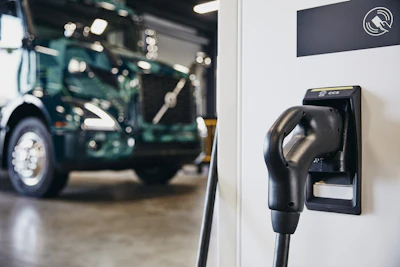
Lawmakers are eyeing the first infusion of a new stream of revenue into the Highway Trust Fund (HTF) in more than three decades, requiring that owners of electric and plug-in hybrid vehicles pay an annual federal registration fee under a massive infrastructure funding bill published by the House of Representatives Transportation and Infrastructure Committee on Sunday.
The provision, tucked into the Building Unrivaled Infrastructure and Long-term Development for America’s 250th Act (BUILD America 250 Act), marks a shift in how the federal government collects revenue from drivers who bypass the gas pump in an effort to offset dwindling fuel tax revenues that have helped destabilize the HTF.
Because EVs do not pay the federal gas tax ($0.184/gallon), they do not contribute to the HTF. Similar proposals have been floated before. Most recently, the One Big Beautiful Bill included a $250 annual fee for EVs and $100 for hybrids to ensure they contribute to road maintenance, but it was struck from the final legislation.
Under the proposed highway bill legislation, owners of electric vehicles would be required to pay an annual federal fee of $100. Owners of plug-in hybrid vehicles would face a $40 annual fee. The fees would be collected nationwide during the standard state vehicle registration or renewal process. The new fees are aimed strictly at passenger vehicles and light-duty consumer models. The legislative text explicitly excludes commercial motor vehicles, such as heavy-duty freight trucks, as well as covered farm vehicles.
Lawmakers also built an inflationary escalator into the bill. Beginning in 2029, the Federal Highway Administrator would be required to increase the annual fees by $5 every two years. However, the bill places firm caps on those hikes, stipulating that the total annual fee cannot exceed $150 for electric vehicles and $50 for plug-in hybrids.
To ensure states enforce the new collection system, the bill includes an aggressive enforcement mechanism. State motor vehicle departments must integrate the federal fee into their yearly registration pipelines or establish an alternate method approved by federal regulators.
If a state fails to implement the collection system, the Federal Highway Administration would be required to withhold 12.5% of that state’s federal highway fund apportionments on the first day of the fiscal year until the state complies.
To ease the administrative burden, states that comply would be allowed to retain up to 1% of the collected fees to cover operational costs. The bill also authorizes $10 million in direct federal grants to assist state DMVs with updating their technology and collection systems.
If passed, the new registration fees would not be permanent. The program includes a sunset provision, with the fees automatically terminating on Oct. 1, 2036.